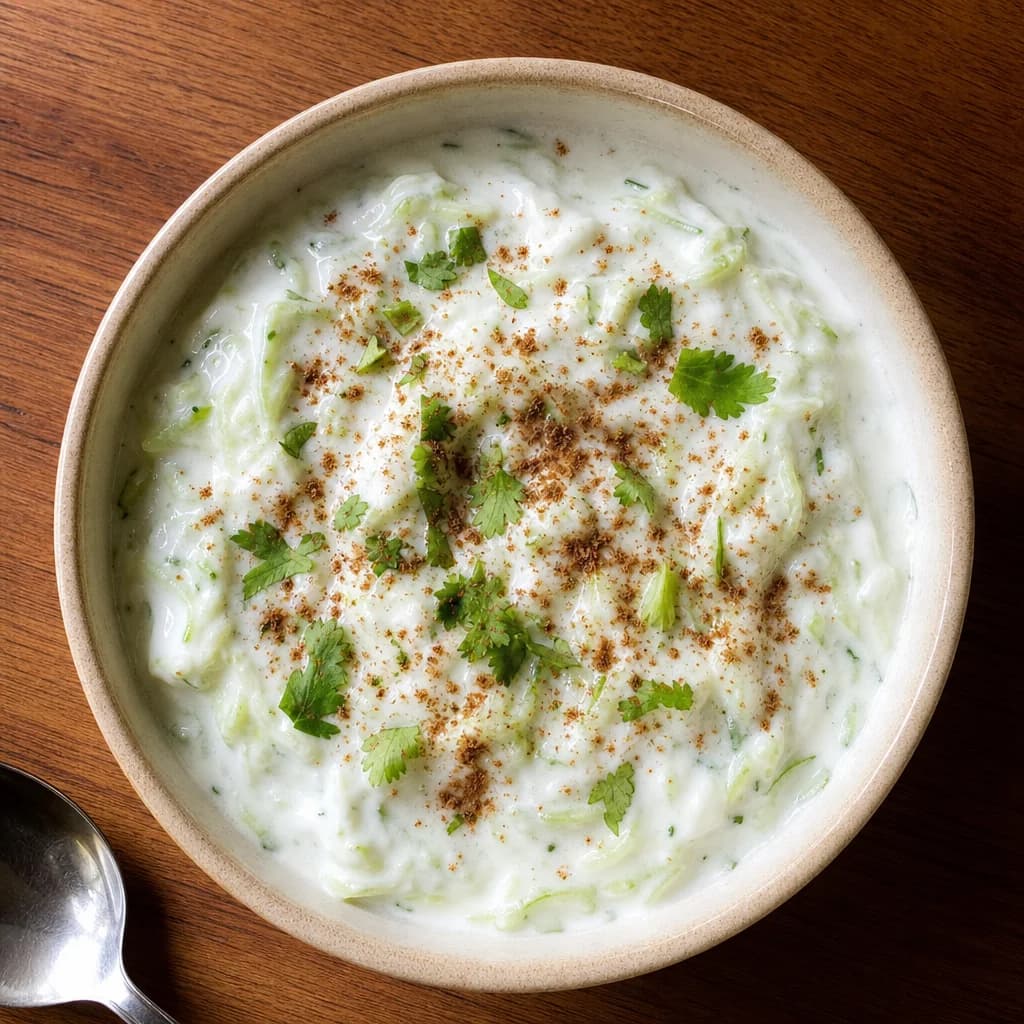
Raita has one job: stay calm while everything else on the table shows off. It is the coolest head at dinner, and it turns out to be the easiest place in desi cooking to add 10g of protein. No heat, no technique, no drama. You whisk, it disappears, and the kheera raita quietly ends up carrying more protein than most of the meal. My mother tested this version on guests who were not warned. Nobody noticed a thing, and two people asked for the recipe.
At a glance
- Serves: 4
- Prep: 10 minutes, no cooking
- Protein per serving: about 4g from the dahi, about 14g with one heaped tablespoon of Heldi Khana whisked in
Ingredients
- 500g plain whole-milk dahi
- 1 cucumber, coarsely grated
- 4 heaped tbsp Heldi Khana
- 1/2 tsp roasted jeera powder
- 1/4 tsp black salt (kala namak), or fine salt
- A pinch of Kashmiri chilli powder
- Fresh coriander or mint, chopped
Method
- Squeeze the grated cucumber over the sink until most of the water is out. This is the difference between raita and soup.
- Whisk the dahi in a bowl until smooth.
- Whisk in the Heldi Khana one spoonful at a time, letting each one disappear before the next goes in.
- Fold in the cucumber, roasted jeera powder and salt.
- Top with the chilli powder and herbs. Chill until dinner.
Notes
Thick Greek-style yoghurt makes a heavier raita and starts from a higher protein base; loosen it with a splash of milk if you like. Low-fat dahi works fine, the texture is just lighter. Made ahead, it keeps in the fridge for a day; give it a stir before serving because the cucumber keeps releasing water. The same method works for boondi raita, onion raita or plain dahi on the side of a biryani.
Where Heldi fits
Dahi is already one of the better protein moves on a desi table, at about 4g per serving here. A 12g serving of Heldi Khana, about one heaped tablespoon, adds 10.1g of complete protein and takes each bowl to about 14g, which is more than most of the mains it sits next to. Cold dishes are the easiest place to start with Heldi, because there is no pot, no timing, and nothing to learn.
Frequently asked questions
Does it clump in cold dahi?
Not if you add it gradually. Whisk the dahi smooth first, then add the Heldi one spoonful at a time and let each disappear before the next. The sunflower lecithin in the blend is there precisely so it mixes clean instead of sitting in lumps.
Can I use low-fat or Greek yoghurt?
Yes to both. Low-fat dahi gives a lighter raita with slightly less protein from the yoghurt itself. Greek-style starts thicker and higher in protein, so loosen it with a little milk or cold water if the finished raita feels too heavy.
How long does it keep?
A day in the fridge, covered. The cucumber keeps releasing water, so stir it before serving. If you are making it further ahead, keep the squeezed cucumber separate and fold it in an hour before dinner.
Is the protein still complete in a cold dish?
Yes. Whey protein isolate carries all nine essential amino acids whether it is stirred into a hot dal or a cold raita. Temperature changes nothing about what your body gets; cold dishes are simply the easiest place to use it.
Heldi is a food supplement. Do not exceed the recommended daily intake. Food supplements are not a substitute for a varied and balanced diet and a healthy lifestyle. Keep out of reach of children. Contains milk (whey).